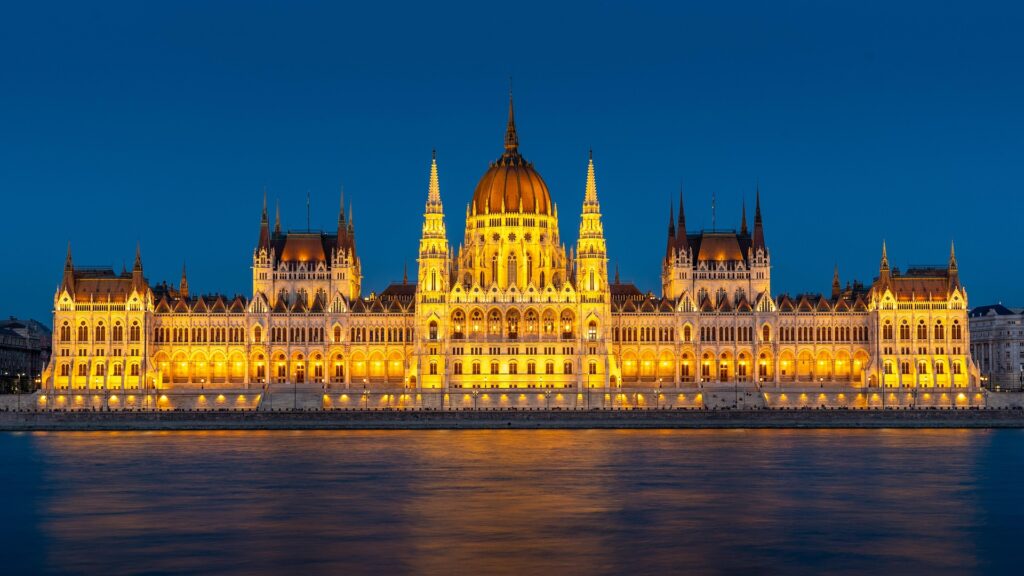
Few cities in Europe combine history, architecture, and vibrant nightlife quite like Budapest. Straddling the majestic Danube River, the Hungarian capital is a city of contrasts—grand castles on one side, lively cafés and ruin bars on the other.
Whether you are drawn by its fascinating history, thermal baths, or breathtaking architecture, Budapest offers an unforgettable European travel experience.
This Budapest travel guide covers the city’s history, visa requirements, travel costs, and a perfect 3-day itinerary.
Quick Budapest Travel Facts
• Country: Hungary
• Currency: Hungarian Forint (HUF)
• Language: Hungarian
• Population: ~1.7 million
• Time Zone: Central European Time (CET)
• Visa: Schengen Area
• Best time to visit: May–June or September
• Famous for: Thermal baths, Danube views, ruin bars, historic architecture
A Brief History: Buda and Pest
Budapest was originally two separate cities:
- Buda – the historic, hilly side with castles and royal buildings.
- Pest – the flat, vibrant commercial and cultural center.
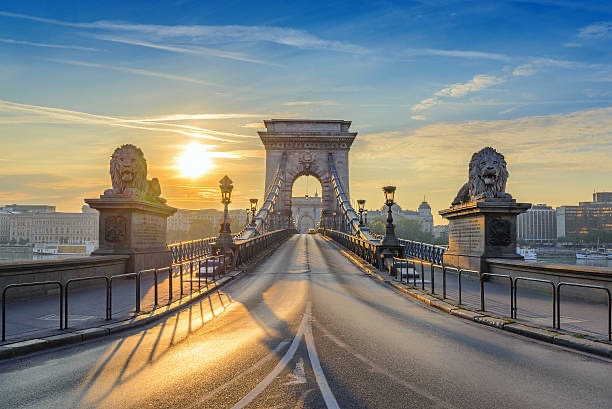
The two cities were officially united in 1873, forming modern-day Budapest. Bridges such as the iconic Széchenyi Chain Bridge now connect both sides across the Danube.
Buda remains quieter and residential, while Pest is where you’ll find the bustling nightlife, cafés, and famous landmarks like the Hungarian Parliament.
The Dark Chapter: Shoes on the Danube Memorial
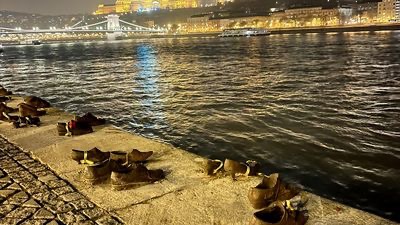
One of Budapest’s most haunting yet important historical sites is the Shoes on the Danube Bank memorial.
During the winter of 1944–1945, members of the fascist Arrow Cross militia executed thousands of Hungarian Jews along the Danube riverbank. Victims were forced to remove their shoes—valuable items at the time—before being shot so their bodies fell directly into the river. (Wikipedia)
Today, 60 pairs of iron shoes sit along the river’s edge, representing men, women, and children who were killed there. The memorial stands near the Hungarian Parliament and serves as a powerful reminder of the tragedies of World War II. (Wikipedia)
It is one of the most emotional sites in the city and a place visitors often pause to reflect.
Getting to Budapest
By Air
Budapest’s main airport is:
Budapest Ferenc Liszt International Airport
It is located about 16 km from the city center. (Pegasus Hava Yolları)
From the airport you can reach downtown via:
- 100E Airport Express Bus (direct to city center)
- 200E bus + metro
- Taxi or ride-hailing services
- Private transfers
The 100E express bus ticket costs around 2500 HUF (~€6–7) and stops at central locations like Deák Ferenc tér. (Maverick Lodges™)
By Rail
Budapest is well connected by train to major European cities including:
- Vienna
- Prague
- Bratislava
- Munich
International trains arrive at stations such as:
- Budapest Keleti Railway Station
- Budapest Nyugati Railway Station
Visa Requirements
Hungary is part of the Schengen Area, meaning a Schengen visa allows entry to Hungary as well as most European countries in the zone. (cabudapest.com)
Travelers from many countries can enter visa-free for short stays, while others need to apply for a Schengen tourist visa before arrival.
Best Time to Visit Budapest
Spring (April–June)
- Pleasant weather
- Outdoor cafés open
- Fewer crowds
Summer (July–August)
- Festivals and nightlife
- Warm temperatures
- Peak tourist season
Autumn (September–October)
- Beautiful fall colors
- Ideal sightseeing weather
Winter (December)
- Magical Christmas markets
- Thermal baths feel even better
Most travelers consider May–June and September the best times to visit.
Average Travel Costs Per Day
Budget Traveler
€40–60 per day
Includes:
- Hostel or budget hotel
- street food or casual meals
- public transport
Mid-range Traveler
€90–150 per day
Includes:
- boutique hotel or Airbnb
- restaurant meals
- sightseeing and attractions
Luxury Traveler
€250+ per day
Includes:
- luxury hotels
- fine dining
- guided tours and spa experiences
Public transportation in Budapest is quite affordable—24-hour passes cost about 2500 HUF (~€6–7) and allow unlimited travel on buses, trams, and metro lines. (Budapest by Locals)
Airbnb vs Hotels in Budapest
Airbnb
Pros
- more space
- local neighborhood feel
- often cheaper for groups
Cons
- inconsistent quality
- sometimes outside central areas
Hotels
Pros
- reliable service
- prime locations near attractions
- daily housekeeping
Cons
- more expensive
For first-time visitors, staying in District V or VII (central Pest) is ideal.
Top 10 Things to Do in Budapest
- Hungarian Parliament Building – One of Europe’s most beautiful government buildings, best viewed from the Danube promenade.
- Buda Castle – Historic palace complex offering panoramic views over the city.
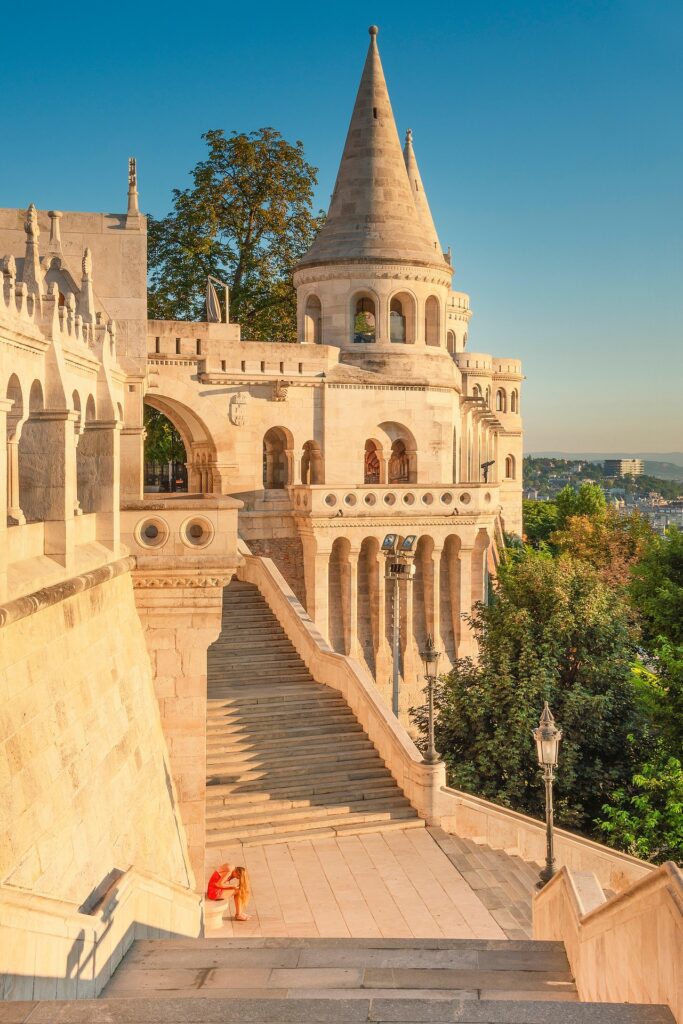
- Fisherman’s Bastion – A fairytale terrace with stunning views of the Parliament and Danube.
- St. Stephen’s Basilica – Budapest’s largest church with a dome you can climb for incredible city views.
- Shoes on the Danube Memorial – A powerful tribute to victims of World War II.
- Széchenyi Thermal Baths – Budapest’s most famous thermal spa experience.
- Chain Bridge – The iconic bridge connecting Buda and Pest.
- Heroes’ Square – A massive historic square surrounded by statues and museums.
- Ruin Bars in District VII – Unique nightlife spots built inside abandoned buildings.
- Danube River Cruise – One of the best ways to see Budapest’s illuminated landmarks at night.
3-Day Budapest Itinerary
Day 1 – Classic Budapest

Morning
- Hungarian Parliament Building
- Walk along the Danube promenade (try one of the free walking tours)
- Visit the Shoes on the Danube memorial
Afternoon
- St. Stephen’s Basilica
- Coffee at a historic café
Evening
- Dinner along the river
- Danube evening cruise
Day 2 – Buda Side
Morning
- Buda Castle
- Fisherman’s Bastion
- Matthias Church
Afternoon
- Explore Castle Hill streets
- Visit museums
Evening
- Sunset views over the city
Day 3 – Culture & Relaxation
Morning
- Széchenyi Thermal Bath (requires prior reservations)
Afternoon
- Heroes’ Square
- City Park (Városliget)
Evening
- Experience Budapest’s famous ruin bars like
Szimpla Kert
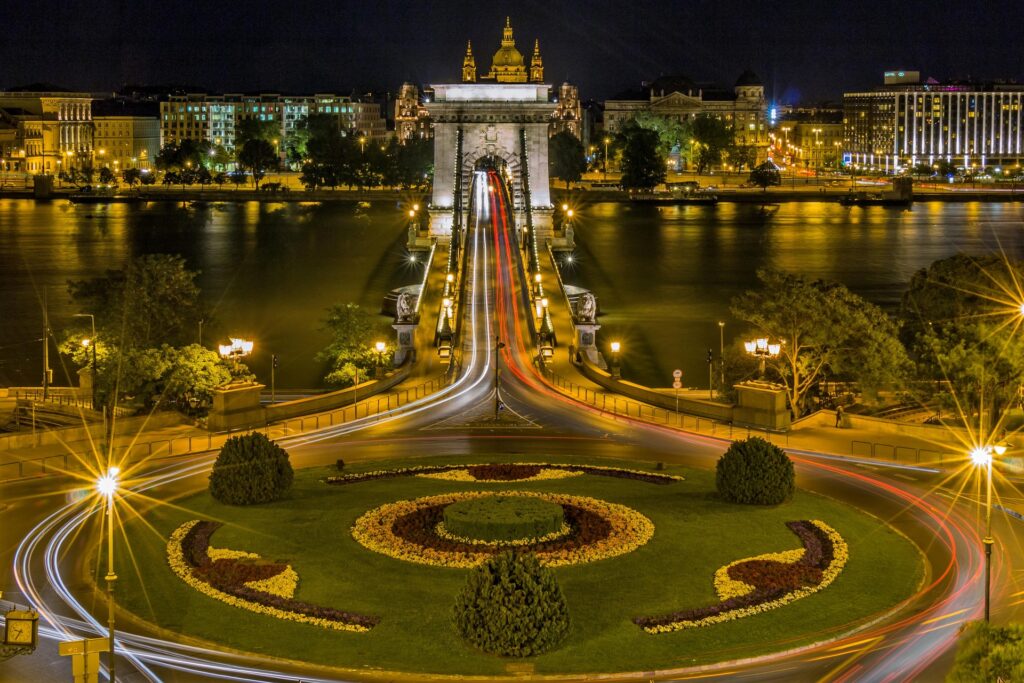
Enjoy this free printable walking route
https://travelbuffdoc.com/wp-content/uploads/2026/03/budapest_walking_map_travelbuffdoc.pdf
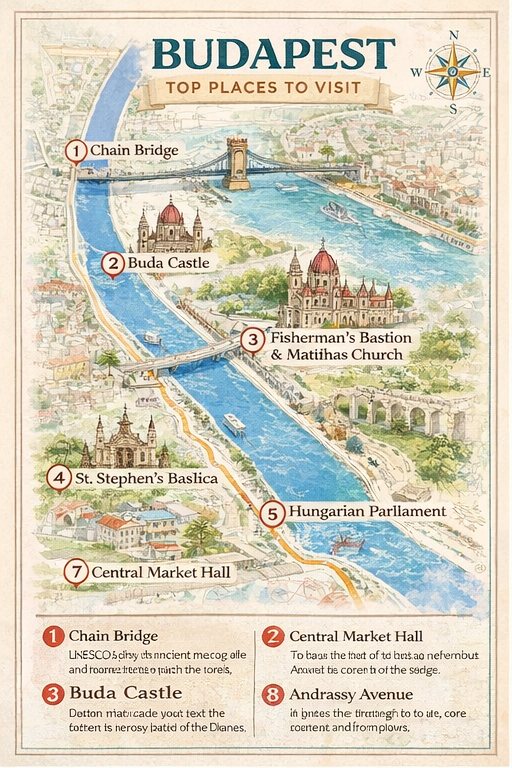
You can even purchase an Illustrated road map here
Final Thoughts
Budapest is a city where beauty and history coexist. From royal palaces and thermal baths to solemn memorials like the Shoes on the Danube, every corner tells a story.
Whether you visit for three days or a week, Hungary’s capital will leave you with memories that last far longer than the journey itself.